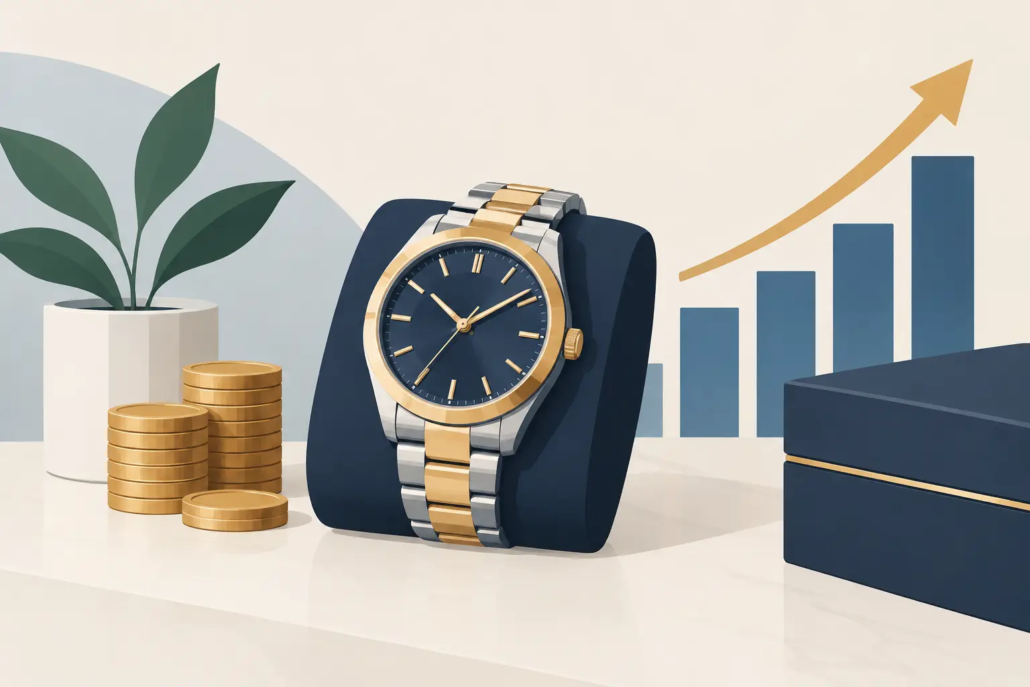
Can Watches Be Investments? What Holds Value
A stainless-steel sports watch can look like a simple luxury purchase until a discontinued reference begins trading far above its original retail price. That possibility leads many buyers to ask: can watches be investments? The answer is yes, but only under selective conditions. A fine watch should first earn its place on your wrist through design, craftsmanship, and personal appeal. Any financial upside is never guaranteed.
For collectors, the most desirable pieces combine enduring brand recognition, a compelling model story, limited supply, and excellent preservation. For everyone else, a premium watch can still be a rewarding purchase, even if it merely retains a respectable portion of its value. Understanding the difference is what separates an informed acquisition from an expensive guess.
Can Watches Be Investments? Start With the Right Expectation
A watch is not a stock, a savings account, or a liquid asset that can be sold at a fixed price on demand. Its market value can move with trends, economic confidence, currency changes, production decisions, and collector taste. Selling also takes effort: authentication, photography, platform fees, insurance, and the time required to find the right buyer can all affect the final result.
The strongest investment candidates tend to be watches collectors already want for reasons beyond resale. They have a recognizable design, a meaningful place in a brand’s history, technical distinction, or a short production run that creates genuine scarcity. A limited edition is not automatically valuable simply because the dial says so. It must also have a credible story and lasting demand.
Think of an investment-minded purchase as a disciplined form of collecting. Buy a watch you would be pleased to own for years. If demand rises, that patience may be rewarded. If it does not, you still own an exceptional object of mechanical engineering and refined design.
What Creates Value in a Collectible Watch?
The market does not reward every expensive watch equally. Price alone does not determine whether a reference will hold value. Four factors usually carry the most weight: brand strength, rarity, condition, and provenance.
Brand strength and model recognition
Established watchmakers bring trust, service infrastructure, heritage, and global recognition. Names such as TAG Heuer, Breitling, Hublot, Oris, Seiko, and Tissot each appeal to different collector communities, from motorsport and aviation enthusiasts to divers and fans of accessible mechanical watchmaking.
Within any brand, certain model families attract more attention than others. A well-known chronograph, a professional dive watch, a GMT built for travel, or a historically relevant reissue is easier for future buyers to understand than an obscure variation. That does not make niche references poor choices. It simply means their resale audience may be smaller and more specialized.
Genuine rarity, not just limited numbering
Low production can support value, particularly when it intersects with a memorable design, a landmark anniversary, a distinctive complication, or a collaboration that collectors regard as authentic. The key word is genuine. A run of 500 pieces can be meaningful if there are far more than 500 motivated buyers. A run of 50 pieces can remain difficult to sell if the watch lacks broad appeal.
Discontinued models deserve attention because supply is permanently capped. Still, discontinuation is not a promise of appreciation. A reference becomes more compelling when its replacement changes the proportions, movement, dial layout, or character that collectors preferred.
Condition and completeness
Condition is one of the clearest dividing lines between an ordinary pre-owned watch and a highly desirable collector piece. Sharp case edges, an untouched dial, original hands, correct bezel components, and a clean bracelet can matter substantially. Over-polishing, replacement parts, moisture damage, and poorly executed repairs can reduce appeal even when a watch appears attractive at first glance.
Keep the full set whenever possible: box, warranty card, manuals, tags, spare links, purchase invoice, and service records. These items support confidence and can make resale easier. A complete set will not transform an unwanted watch into a collectible, but it can strengthen the position of a sought-after reference.
Provenance and a convincing story
Provenance means documented ownership and history. For modern watches, this often starts with original papers and a clear purchase trail. For vintage pieces, provenance may include service receipts, period photographs, military issue records, or a connection to a notable event or individual.
The market values certainty. A watch with verifiable originality and a coherent history is more attractive than one with unanswered questions, no matter how appealing its asking price may seem.
Which Watches Are More Likely to Hold Value?
There is no universal formula, but certain categories consistently attract collector attention. Mechanical sports watches from respected brands often benefit from versatile design and broad wearability. Chronographs have a powerful following because they combine visual complexity with motorsport and aviation heritage. Purpose-built dive watches remain popular thanks to their practical durability and recognizable silhouettes.
GMT watches can also perform well when they pair travel functionality with a strong model identity. On the more expressive end, skeletonized pieces, unusual case materials, and bold limited editions can become highly collectible, although their audience is usually narrower. Their value depends more heavily on design relevance and the particular brand’s following.
Accessible price points should not be overlooked. Certain Seiko, Zodiac, Bulova, Certina, and Tissot references can appeal to collectors because they offer historic design language, respected movements, or strong enthusiast communities without demanding five-figure budgets. Lower entry cost does not remove risk, but it can make careful collecting more attainable.
At the highest level, scarcity and brand prestige may create intense demand, particularly for uncommon precious-metal configurations, important complications, and limited-production models. These pieces require even more research because the stakes are higher and market pricing can be less forgiving.
Buy With Discipline, Not Hype
The most common mistake is chasing a watch solely because social media, auction headlines, or a quick price chart suggests it is rising. Markets can cool quickly. A watch purchased at the peak of excitement may take years to recover its cost, especially after taxes, shipping, service, and selling fees.
Start with a defined budget and decide whether you are buying primarily to wear, collect, or preserve capital. If you plan to wear the watch regularly, accept that scratches and wear may affect resale value. If you plan to preserve it, store it carefully, retain every original component, and use qualified service professionals when maintenance is required.
Research the exact reference rather than the brand name alone. Case size, dial color, bracelet configuration, movement generation, production year, and regional variation can all affect desirability. Compare actual completed-sale prices where available, not only ambitious asking prices. A high listing price tells you what a seller hopes to receive, not what the market has confirmed.
Authenticity is non-negotiable. Purchase from a trusted specialist, examine documentation, and ask direct questions about condition, warranty, service history, and included accessories. For a high-value acquisition, an independent inspection can be a sensible added safeguard.
A Better Way to Build a Watch Collection
A focused collection usually holds up better than a random group of purchases. You might concentrate on aviation-inspired chronographs, Swiss dive watches, heritage reissues, or a balanced selection of dress, sport, and travel watches. A clear point of view makes it easier to learn the details that distinguish an exceptional example from an average one.
Diversification matters here as well. Avoid placing all your budget into one fashionable reference or one brand. A collection with different price tiers and styles can offer more flexibility if your tastes change or if one segment loses momentum. It also gives you more reasons to wear what you own.
For buyers seeking a particular model, Relojes Exclusivos offers a curated route into prestigious brands and can assist in locating hard-to-find references. Whether you choose a current-production icon or a limited edition with collector potential, insist on the details that protect long-term confidence: authenticity, condition, complete documentation, and a watch you genuinely want to keep.
The finest outcome is not a speculative flip. It is choosing a remarkable timepiece that reflects your standards, performs beautifully on the wrist, and remains desirable long after the first excitement of purchase has passed.