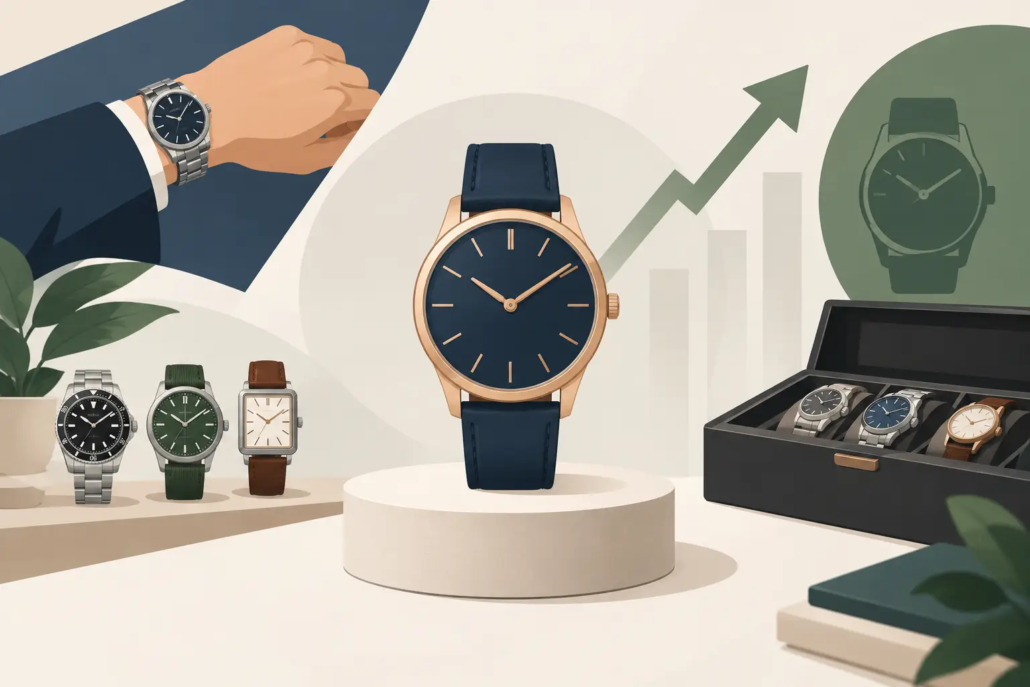
Watch Collecting Trends Worth Following Now
A collector’s next watch is no longer defined solely by a famous logo or a larger case. The most compelling watch collecting trends favor pieces with clear identity: a GMT built for real travel, a slim mechanical dress watch with presence, or a heritage diver whose design still feels sharp decades later. For buyers building a collection rather than chasing a single purchase, that shift creates more interesting choices across every luxury tier.
The market still rewards prestige, finishing, and recognizable model families. Yet collectors are becoming more selective about what makes a watch worth owning. The question is changing from “Is this popular?” to “Will I want to wear this five years from now?”
Watch Collecting Trends Are Becoming More Personal
The era of buying the same few obvious references is giving way to more individual collections. A strong collection now often reflects the owner’s routines, interests, and eye for design rather than a checklist of internet-approved watches.
That can mean pairing a classic Swiss chronograph with a Japanese mechanical diver, choosing an aviation watch for its dial layout and history, or adding a sculptural skeleton piece that would never be mistaken for a conservative daily wearer. Collectors are less concerned with having one answer for every occasion and more interested in owning watches that each offer a distinct experience.
This does not mean established luxury brands have lost their appeal. Quite the opposite. Iconic names retain power because they offer proven design language, dependable service networks, and instantly recognizable craftsmanship. The difference is that buyers increasingly compare an established icon against independent character, unusual color, a compelling movement, or a more versatile size before making a decision.
Smaller Cases, Better Proportions
One of the clearest shifts is toward more considered sizing. Cases around 36 mm to 40 mm have become especially attractive for daily wear, while even sport watches are being judged less by sheer diameter and more by thickness, lug-to-lug length, and balance on the wrist.
A 42 mm dive watch can still be exactly right, particularly when its bezel, dial, and bracelet were designed for a bold professional profile. But a large watch should earn its dimensions. Collectors are moving away from oversized cases that dominate every outfit and toward proportions that work with tailoring, casual clothing, and travel.
This trend also makes vintage-inspired designs more appealing. Many mid-century references were compact, legible, and elegant without feeling delicate. Modern interpretations can deliver that same restraint with contemporary water resistance, sapphire crystals, and more durable movements.
Wearability Is a Long-Term Value
A watch that looks impressive in a product image but sits awkwardly under a cuff often becomes a rarely worn purchase. Before choosing a reference, consider not only the case width but also its thickness, bracelet taper, clasp comfort, and dial opening. The best collectors know that a watch’s presence comes from proportion, not simply size.
Heritage Designs With Modern Capability
Heritage is not about pretending a new watch is old. It is about preserving the details that gave an original purpose and character: a clean pilot dial, a rotating dive bezel, a tachymeter scale, or a domed crystal profile. Collectors continue to favor these visual codes because they bring depth to a watch without relying on excess decoration.
The strongest modern heritage pieces also deliver practical upgrades. Better luminosity, improved bracelets, automatic movements with longer power reserves, and everyday water resistance make them easy to own rather than merely admire. This is where brands with genuine sporting and technical histories have a particular advantage.
There is a trade-off. Vintage-inspired watches can be so faithful to the past that they sacrifice convenience, while highly updated versions may lose the charm that made the original memorable. The most satisfying references sit in the middle: recognizable heritage, current performance, and enough refinement for regular wear.
Purposeful Complications Over Novelty
Complications remain a major part of watch collecting trends, but collectors are increasingly choosing functions they can actually use. GMT watches are especially desirable because they combine visual interest with a practical second time zone. They suit frequent travelers, international professionals, and anyone who wants a dial with more depth than a simple three-hand model.
Chronographs remain essential for their motorsport and aviation associations, along with the satisfying interaction of pushers and timing scales. A date display, day-date format, moonphase, or power reserve indicator can also be valuable when it improves how the watch fits into daily life.
The key is restraint. A complicated dial should remain readable. A watch does not need every possible feature to feel sophisticated. In many collections, a well-executed GMT or chronograph offers more lasting appeal than a highly complicated piece that is too busy to wear often.
The Rise of Distinctive Materials and Color
Black, silver, and blue remain dependable choices, but collectors are showing greater confidence with color. Deep green, warm burgundy, ice blue, salmon, bronze, and textured gray dials are becoming part of serious collections rather than short-lived experiments. Color can make a familiar silhouette feel personal without compromising its versatility.
Materials matter just as much. Titanium appeals to buyers who want a substantial tool-watch presence without the weight of steel. Bronze develops a unique patina, giving each watch an increasingly individual appearance. Ceramic offers exceptional scratch resistance and a contemporary finish, though some collectors still prefer the tactile warmth and easy refinishing of steel.
A colored dial or unconventional case material works best when the underlying watch is strong. Choose it because it amplifies a design you already appreciate, not because it is the newest variation in a limited release.
Independent Spirit and Specialist Brands
Collectors are looking beyond the most familiar names for watches with strong point of view. Heritage specialists, independent makers, and enthusiast-led brands can offer unusual case architecture, distinctive dial work, faithful tool-watch design, and value that feels more immediately connected to the product.
This is not simply a search for obscurity. A lesser-known watch should still be assessed with the same standards as any major luxury purchase: movement quality, finishing, brand history, service access, production consistency, and future desirability. Buying outside the mainstream can be rewarding, but it requires more attention than selecting an established icon with decades of market recognition.
For a balanced collection, an independent or specialist piece often works best alongside proven references. It adds personality while allowing the collection to retain a foundation of enduring, recognized watchmaking.
Collecting With Fewer, Better Decisions
The most mature trend may be a slower buying pace. Many collectors are reducing impulse purchases and concentrating on watches that fill a genuine role. A refined three-watch collection might include a versatile steel sports watch, a classic dress-oriented piece, and a travel or timing watch with a different complication. Others may prefer a focused collection built entirely around divers, chronographs, or a specific era.
There is no universal ideal number. What matters is avoiding repetition without intention. Two blue-dial steel watches may be redundant, or they may be a thoughtful comparison between a polished luxury sports model and a rugged professional diver. The distinction comes down to whether each piece has a reason to remain.
Condition, completeness, and provenance deserve attention as well. Original boxes, papers, service history, limited-edition documentation, and an unpolished case can affect desirability, particularly for collectible references. For a watch intended primarily for wear, however, paying a premium for flawless collector packaging may not make sense. Buy according to your purpose.
How to Choose a Trend That Will Last
Start with the watch you will reach for most. If your life involves travel, a GMT may deserve priority. If you spend weekends near water or prefer a more relaxed wardrobe, a dive watch offers durability and confidence. If your watch needs to work with a suit, consider a thinner case, restrained dial, and bracelet or leather-strap versatility.
Then look at what the reference delivers beyond the trend: its movement, finishing, heritage, comfort, and serviceability. A limited edition can be exciting, but limited production alone does not create lasting significance. Exceptional design and a convincing story do.
At Relojes Exclusivos, a curated selection makes it easier to compare prestigious sports, travel, dress, and statement watches across leading makers. The right choice is not necessarily the most talked-about model. It is the one with enough craftsmanship and character to keep earning wrist time long after the trend cycle has moved on.
Choose with discernment, wear with confidence, and let every addition say something specific about your taste.