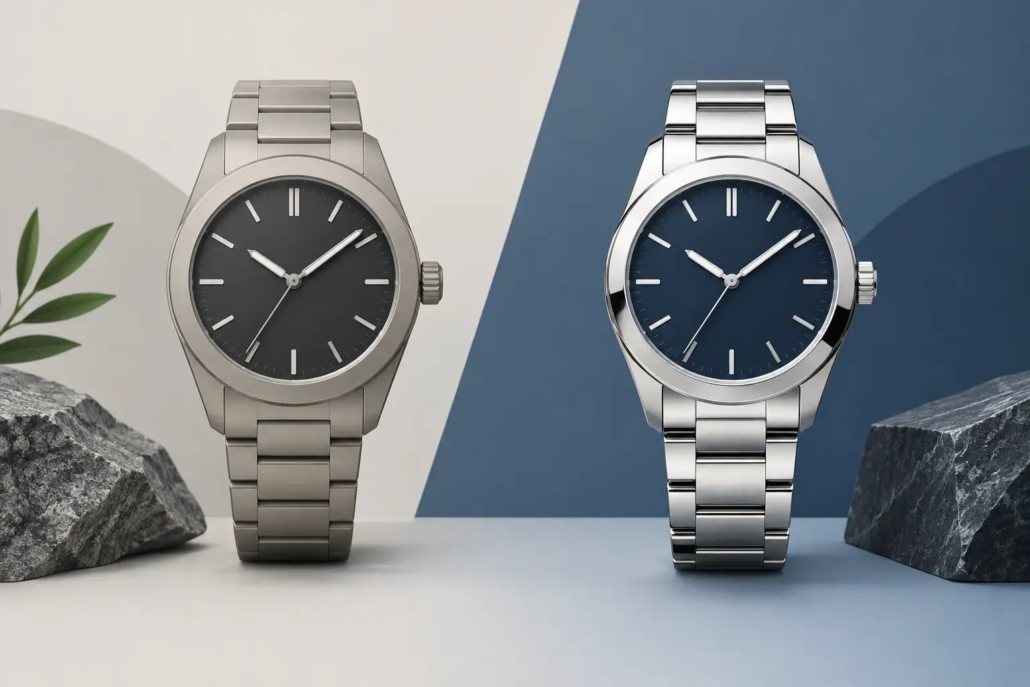
Titanium Versus Steel Watches for Your Wrist
A 42 mm case can look commanding in a display case and feel entirely different after eight hours on the wrist. That is the real question behind titanium versus steel watches: not which material is universally better, but which one belongs with your routine, style, and expectations of a premium timepiece.
Stainless steel remains the defining material of modern luxury sports watches. It has presence, a satisfying density, and a bright finish that moves easily from a tailored jacket to a weekend dive. Titanium offers a more technical proposition: significantly less weight, exceptional corrosion resistance, and a restrained, contemporary character prized in aviation, professional dive, and high-performance collections.
Both can be exceptional. The right choice becomes clear when you consider how a watch wears, ages, photographs, and earns its place in your collection.
Titanium Versus Steel Watches: The Essential Difference
The most immediate distinction is weight. Titanium is roughly 40 percent lighter than stainless steel, depending on the alloy and construction. On a substantial chronograph, GMT, or dive watch, that difference is unmistakable. A titanium case and bracelet can deliver the visual authority of a large professional watch without the constant physical reminder of its size.
Steel has a different appeal. Its density makes a watch feel substantial and reassuring, particularly on a bracelet. Many collectors associate that solid, balanced heft with traditional Swiss sports-watch design. A polished steel bezel catching the light also has a brilliance titanium rarely matches.
Neither sensation is inherently more luxurious. Titanium feels engineered and purposeful. Steel feels classic and enduring. Your preference may come down to whether you want a watch you notice throughout the day or one that almost disappears until you look at the dial.
Titanium is lighter, not lesser
A light watch is often misunderstood as a less expensive-feeling watch. With a well-made titanium piece, the opposite is true. The case construction, finishing, movement, and design determine quality, not mass alone. Premium titanium watches from respected makers are built for demanding use and can be every bit as refined as their steel counterparts.
Titanium is especially compelling for buyers who wear a watch daily, travel frequently, or prefer larger cases. A 44 mm pilot’s chronograph in steel can become tiring on a long day. The equivalent titanium model retains its dramatic wrist presence while remaining comfortable on flights, at the office, or during an active weekend.
Steel delivers traditional visual impact
Steel is the more familiar luxury material because it is remarkably versatile. It accepts crisp brushing, mirror polishing, and contrasting surfaces beautifully. That makes it ideal for watches intended to be both technical instruments and polished accessories.
If the appeal of your next watch lies in a sunburst dial, a polished bracelet center link, or a sharply finished bezel, steel gives the design more sparkle. It is also easier to match with other jewelry, from white gold wedding bands to silver cufflinks. For a buyer seeking one elevated watch to cover business, evening, and travel, steel remains the safest and most adaptable choice.
Durability, Scratches, and Daily Wear
Titanium has an outstanding strength-to-weight ratio and naturally resists corrosion, including exposure to sweat, saltwater, and humid climates. This makes it a natural fit for serious dive watches and outdoor-oriented designs. It is also hypoallergenic, which matters for anyone whose skin reacts to certain metal alloys.
But titanium is not invincible. Uncoated titanium can show surface marks more readily than many people expect. These marks are often fine scuffs rather than deep damage, and the metal develops a soft, lived-in patina that some enthusiasts enjoy. Others may find that patina less desirable on a dressier watch.
Stainless steel is also highly resistant to corrosion and performs superbly in everyday conditions. Depending on the grade used, it can offer excellent resistance to scratching, although polished steel surfaces will still collect hairline marks with regular wear. The advantage is familiarity: most watch owners know how steel ages, and refinishing options are widely understood during servicing.
Finishing changes the equation
Material alone does not tell the full story. A bead-blasted or brushed titanium watch tends to hide daily wear well, reinforcing its understated, instrument-first character. A polished titanium watch can look elegant, but it demands more care if you prefer a pristine appearance.
Likewise, a fully brushed steel tool watch may remain remarkably discreet after months of use, while a high-polish steel chronograph will show every encounter with a desk, doorframe, or clasp. Evaluate the finish as closely as the metal. A watch is meant to be worn, but the way it records wear should suit your expectations.
Some titanium models use proprietary surface-hardening treatments. These can substantially improve scratch resistance and are worth considering if you want titanium’s low weight without as much concern over superficial marking. Ask about the exact case material and treatment rather than assuming all titanium performs the same way.
Appearance: Technical Gray or Brilliant Silver?
Titanium usually presents as a darker gray than steel, with a matte or satin cast that changes subtly across different lighting. It suits black, charcoal, blue, green, and high-contrast tool-watch dials particularly well. The overall effect is discreet, modern, and confident.
Steel is brighter and more reflective. It gives a watch a more immediate jewelry-like quality, even when the design is rooted in diving, racing, or aviation. For this reason, steel is often the stronger option for formal events, milestone gifts, and buyers who want a recognizable luxury signal from across the room.
That said, titanium can be remarkably sophisticated. A slim titanium watch on a refined bracelet or leather strap has a quiet elegance that appeals to collectors who do not need a watch to announce itself. It also pairs exceptionally well with black tailoring, casual luxury, and contemporary architecture-inspired design.
Comfort Matters More Than Case Diameter
When comparing titanium versus steel watches, buyers often focus on millimeters and overlook grams. Yet weight affects comfort more than most specification sheets suggest. A compact 39 mm steel watch may feel perfect, while a 43 mm steel GMT on a full bracelet could feel top-heavy. In titanium, the larger watch may become far more practical.
This is particularly relevant for watches with thick automatic movements, rotating bezels, or substantial water-resistance ratings. Titanium allows brands to create capable, full-size professional watches that remain easy to wear under a shirt cuff or during a full day of travel.
Steel can still be more balanced for certain preferences. The added weight helps a bracelet sit firmly in place, and some wearers find an ultra-light watch slightly less grounded on the wrist. If possible, compare similar case sizes in person. If you are purchasing online, check not only diameter but thickness, lug-to-lug measurement, bracelet construction, and total weight where available.
Price and Long-Term Value
Titanium is generally more difficult to machine and finish than steel, which can contribute to a higher retail price. The premium is not always dramatic, but it is real, particularly when a brand uses specialized alloys or hardening processes. For many buyers, the comfort gain justifies it immediately.
Steel typically offers broader choice at every price level. It is central to the market for Swiss sport watches, classic chronographs, and versatile everyday models. That popularity can also make steel easier to understand from a resale perspective, especially in highly recognizable model families.
However, material should not be treated as a shortcut to investment value. Brand desirability, production numbers, condition, movement, dial configuration, provenance, and market demand matter far more. A limited titanium edition from a prestigious maker may hold stronger collector appeal than a standard steel reference, while a sought-after steel icon may be the more liquid choice.
Which Material Should You Choose?
Choose titanium if you value all-day comfort, prefer a larger case, spend time in water or demanding environments, or want a watch with a discreet technical edge. It is an excellent choice for professional dive watches, aviation-inspired pieces, and modern everyday companions that need to work hard without weighing you down.
Choose steel if you want maximum versatility, luminous polish, traditional luxury presence, and a material that transitions naturally from casual wear to formal settings. It remains the benchmark for a first serious Swiss watch and a compelling foundation for any collection.
For a collection, there is no need to declare a winner. Steel can provide the bright, substantial centerpiece, while titanium brings contrast: lighter, darker, and more purpose-built. The best material is the one that makes you reach for the watch without hesitation.
Before you decide, picture the watch on an ordinary Tuesday, not only under boutique lighting. Consider your commute, your wardrobe, your travel schedule, and the occasions you want it to mark. At Relojes Exclusivos, the right choice is the one that feels as exceptional after a full day of wear as it does the moment it arrives.